Foam Over Metal With A Silicone Topcoat
Closed-cell foam over the existing panels, then silicone that shields the foam from sunlight and handles any shallow ponding.

We install spray foam roofing over commercial metal and low-slope roof decks in Frankfort, then coat it. The foam adds insulation and covers every screw.
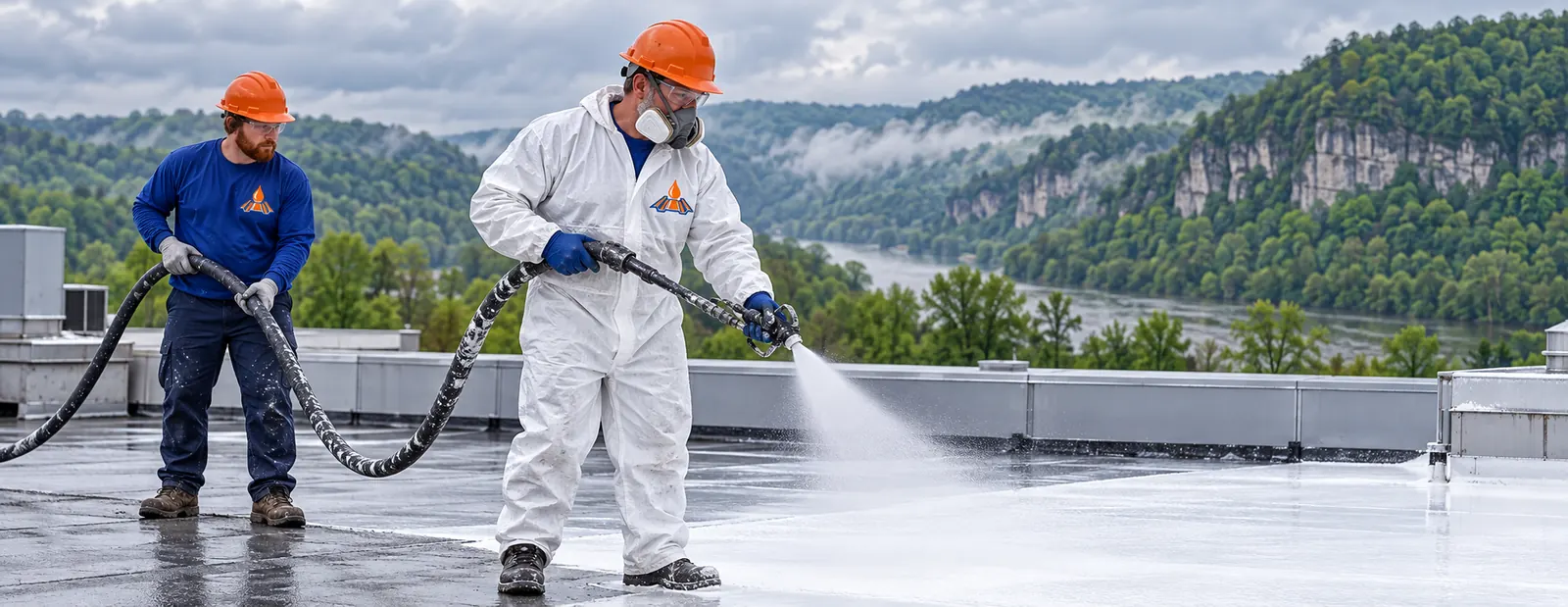
Foam suits buildings that need insulation as much as a dry roof. These rows show where it beats a coating alone.
| What You See On The Roof | Foam + Coating | Coating Alone | Repairs First |
|---|---|---|---|
| Bare steel over a shop with no insulation | Foam + Coating | Coating Alone | Repairs First |
| Hundreds of leaking screws across the field | Foam + Coating | Coating Alone | Repairs First |
| Insulated building with only surface rust | Foam + Coating | Coating Alone | Repairs First |
| Wet insulation or rotted decking under the roof | Foam + Coating | Coating Alone | Repairs First |
| Low spots that need building up for drainage | Foam + Coating | Coating Alone | Repairs First |
| Rooftop units with intakes close to the work | Foam + Coating | Coating Alone | Repairs First |
Foam needs a dry, firm, clean surface. Wet or rotted material under the roof comes out first.
Foam changes the roof edges and every penetration, so these six get planned before the rig arrives.
Sprayed material closes any opening it touches, so ridge vents and exhaust openings are masked or rebuilt to keep air moving.
Every fastener ends up buried, which ends washer leaks. Loose screws still get tightened first so panels do not shift.
One continuous layer fills the ribs and covers the laps. Its thickness is checked over each rib.
Added thickness changes curb heights. Skylight frames get raised, replaced, or covered over before spraying.
The roof gets thicker at the edge, so drip edge and gutters are adjusted so water still lands in the gutter.
Units are shut down and intakes covered so overspray and odor stay out. Curb flashing heights are checked with the new thickness.
Foam always gets a coating on top. These are the common pairings in the Frankfort area.
Closed-cell foam over the existing panels, then silicone that shields the foam from sunlight and handles any shallow ponding.
Foam sprayed thicker in sagging areas can help water drain toward gutters. The foam layout comes from a slope check of the roof.
About silicone topcoatsWhere the foamed roof drains well, acrylic is a lower-cost topcoat. It must be recoated on schedule to keep sun off the foam.
About acrylic coatingsThese depend on dry substrate, the right foam thickness, and a topcoat kept in good shape.
Closed-cell foam rates about R-6 per inch according to U.S. Department of Energy Building America guidance, which helps uninsulated metal buildings most.
One continuous foam layer covers every screw head and lap, the two places exposed-fastener roofs leak most.
Foam goes over the existing roof when it is dry and firm, so the building stays closed in and in use.
The coating over the foam is the wear layer. Recoating it on schedule keeps sunlight from breaking down the foam underneath.
Foam jobs start with either problem. Tell us which one you are fighting.
Call and describe how many spots drip. Widespread screw leaks are where foam makes the most sense.
Call UsRequest an estimate and we compare foam plus coating with coating alone for your building.
Get A Free EstimateFoam is applied by a spray rig in passes, then topcoated.
We check for wet insulation, loose panels, and rotted areas, and note every unit, vent, and skylight the foam will meet.
Panels are washed and dried, loose screws tightened, and rust primed so the foam bonds to a firm surface.
Air intakes are covered and units shut down briefly. Vehicles and equipment near the building get overspray covers.
Foam goes on in passes until it reaches the specified thickness, checked with a probe across the roof.
The protective coating goes on soon after spraying so sunlight never sits on bare foam.
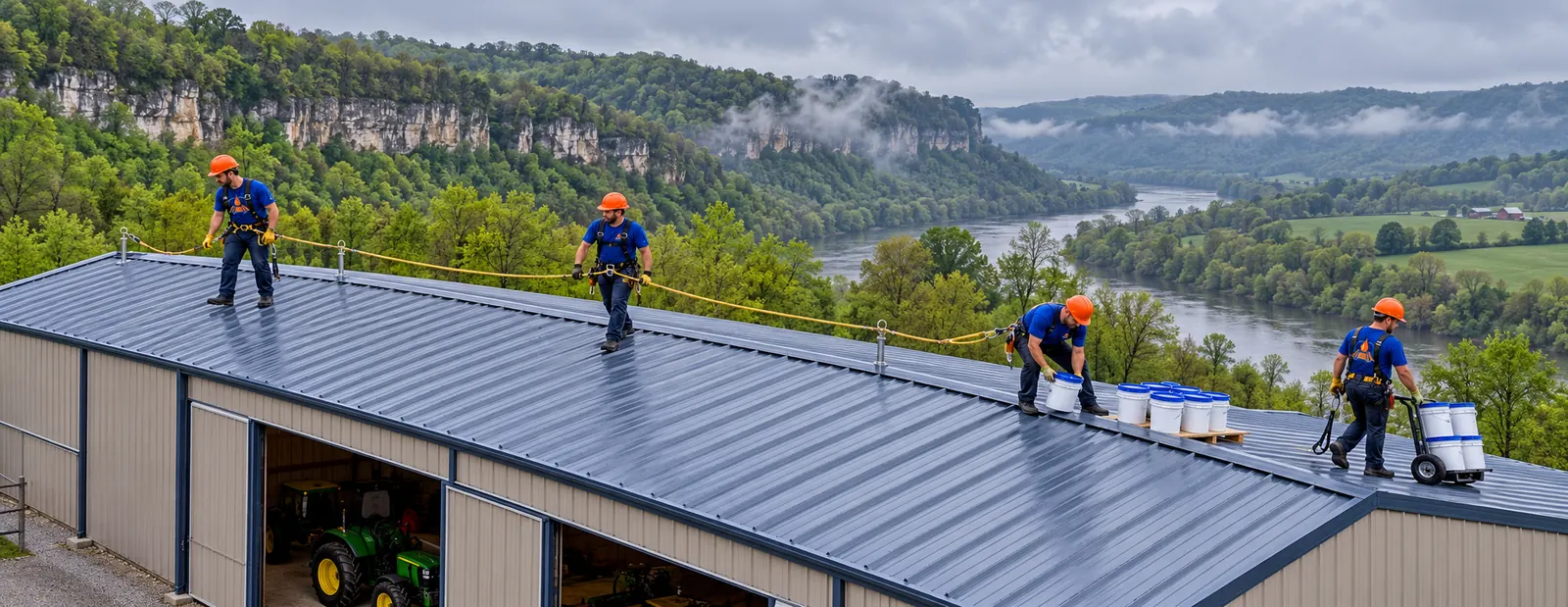
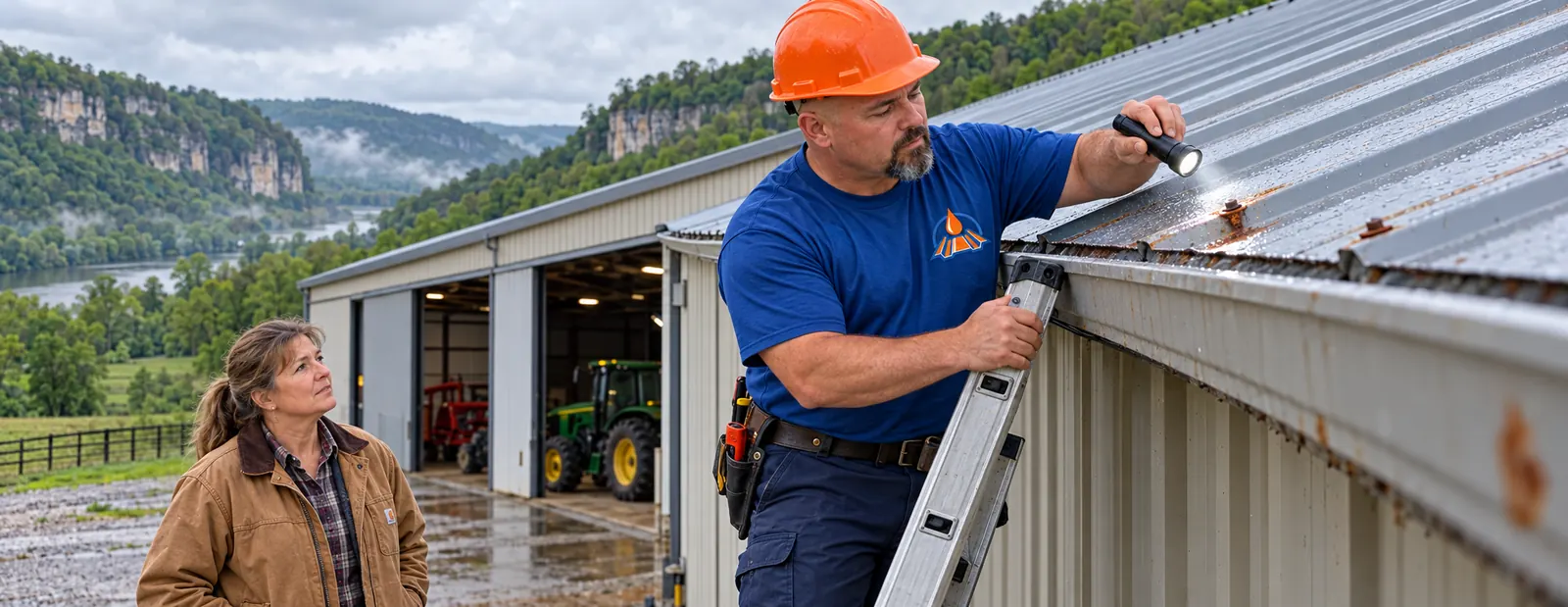
Foam is not the only answer for a leaking metal roof.
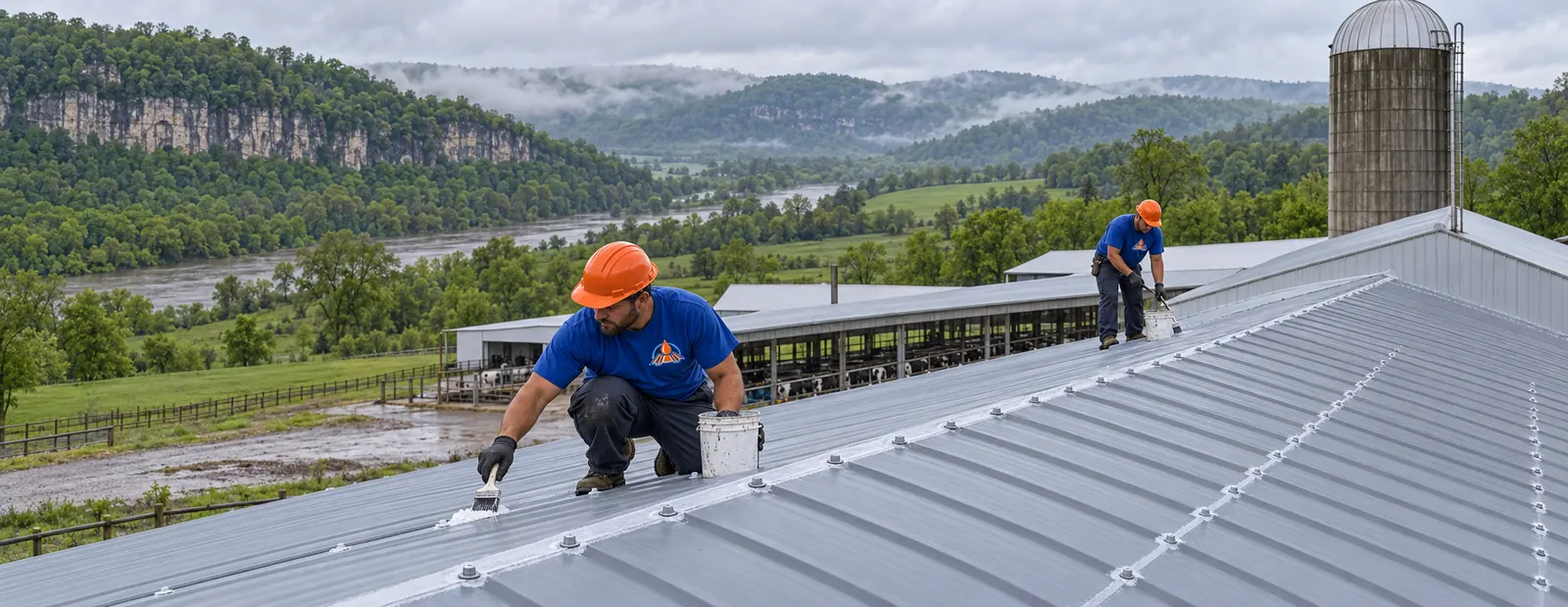
An insulated building with surface rust gets the same leak protection from a coating at lower cost.
See metal roof coating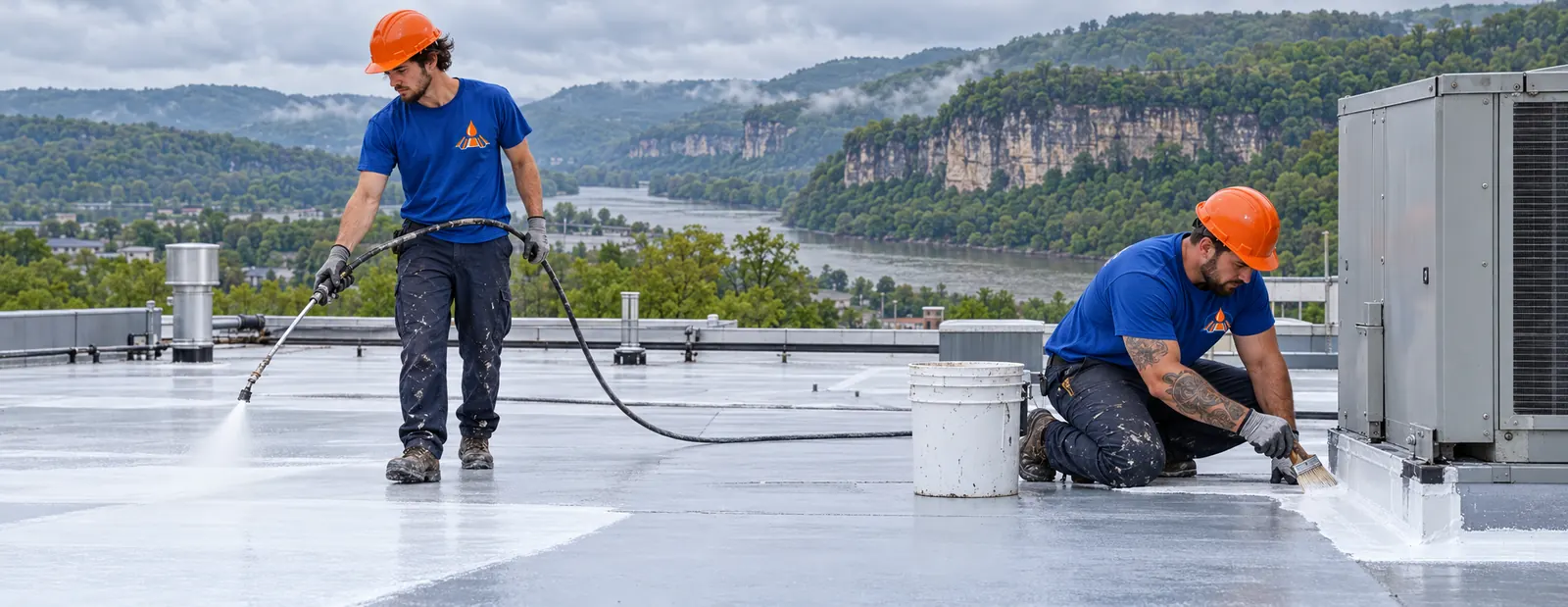
Silicone is the usual topcoat over foam and also stands alone on low-slope sections that pond.
See silicone coating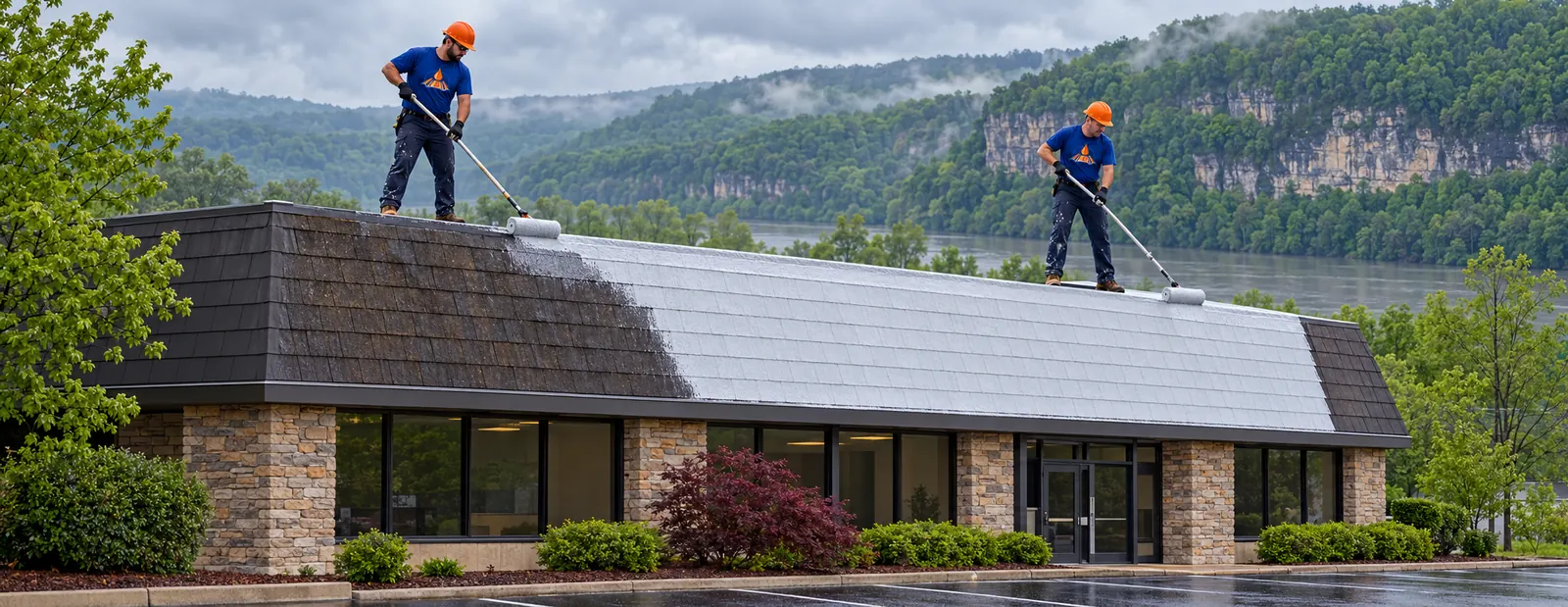
Buildings with a shingle front section and a metal shop behind can have each part handled in one plan.
See shingle coatingInsulation, code, and utility questions come up most.
It depends on how the building is heated and cooled. Foam adds insulation and buries every screw and lap in one layer, while a coating alone seals and reflects without insulating.
Foam always needs a coating on top to protect it from sunlight.
The Kentucky Building Code, published by the Kentucky Department of Housing, Buildings and Construction, applies statewide. Questions center on the fire classification of the foam and coating assembly, flashing heights at walls and curbs, and attachment of any new panels.
FPB is Frankfort’s municipal utility, and its business energy services center on equipment and energy use rather than roofs. Before calling, note the meter rate, the age and count of rooftop units, and which rooms run hottest under the panels.
Thickness is set by the insulation goal, the drainage plan, and the product data. It is measured with a probe during spraying so thin spots are caught before the topcoat.
Spraying carries odor near the work, so units and intakes nearby are shut down or covered during application. Crews work in sections so most of the building stays in normal use.
No. Moisture trapped under foam keeps rotting the deck and rusting the steel. Wet areas found during the inspection are cut out and replaced before any foam goes on.
Request a free estimate and we compare foam with a coating alone for your roof.
Leave a name and number and we will call you about the roof.
Or call (502) 289-9862 now