White Acrylic Over Primed R-Panel
Rust primer, sealed screws, and fabric at the laps, then two white acrylic coats. It fits shops and barns with surface rust only.
Our acrylic roof coating goes on pitched commercial metal roofs in Frankfort: shops, barns, and warehouses whose panels shed rain fast.
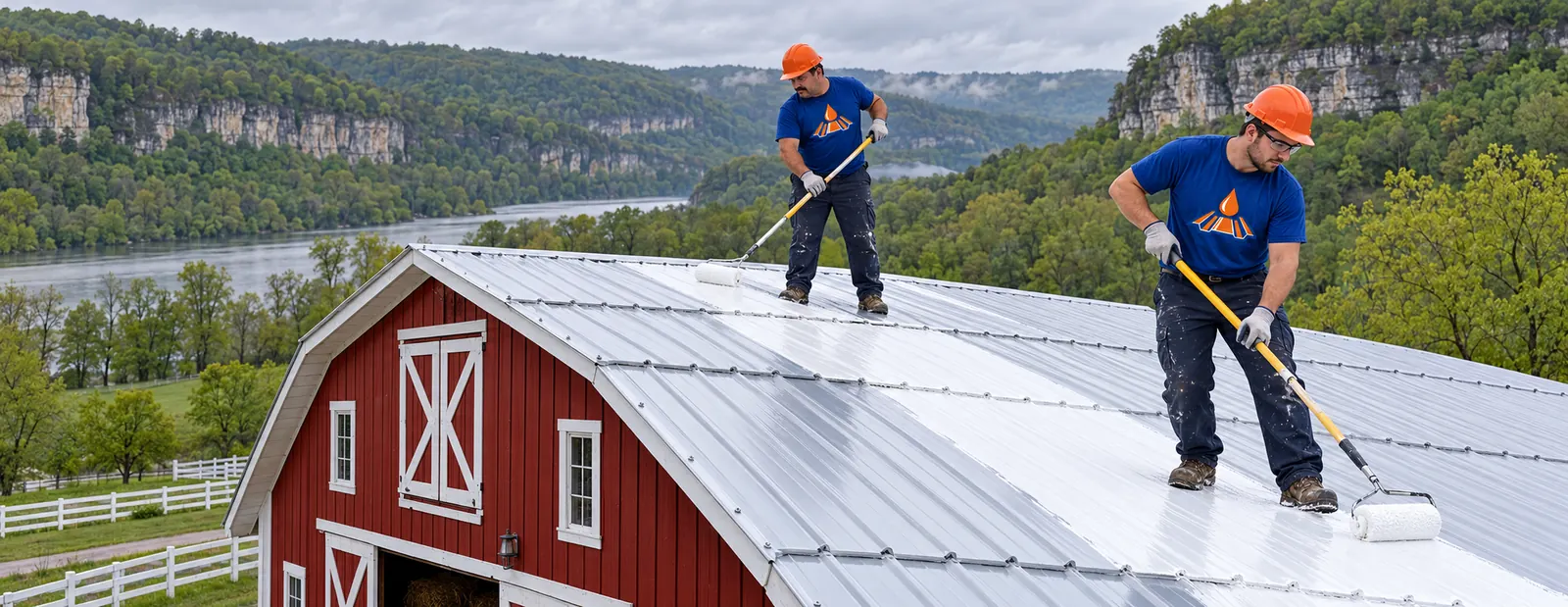
Acrylic is water-based, so it wants a roof that drains and weather that stays dry while it cures.
| What You See On The Roof | Acrylic | Silicone | Another Step First |
|---|---|---|---|
| Pitched R-panel that sheds rain within minutes | Acrylic | Silicone | Another Step First |
| Hot shop or storage space under bare steel | Acrylic | Silicone | Another Step First |
| Flat spots that hold water near the gutters | Acrylic | Silicone | Another Step First |
| Rust-through holes along the eave | Acrylic | Silicone | Another Step First |
| A roof coated with silicone years ago | Acrylic | Silicone | Another Step First |
| A north slope that stays damp into the afternoon | Acrylic | Silicone | Another Step First |
Acrylic and ponding water do not mix. Low spots on an acrylic roof get drainage fixes or a silicone section.
These are the details on a pitched metal roof that an acrylic system has to seal and protect.
The peak of a pitched roof takes the most wind. Caps get refastened and vents are left open so the building still breathes.
Pitched R-panel roofs carry a screw every foot or so on each rib. Each head gets sealed before the white coats.
Long runs use two panels lapped partway down. That joint gets fabric because it opens a little every freeze.
Skylight panels on barns and shops are kept clear, replaced, or covered. The decision comes before coating.
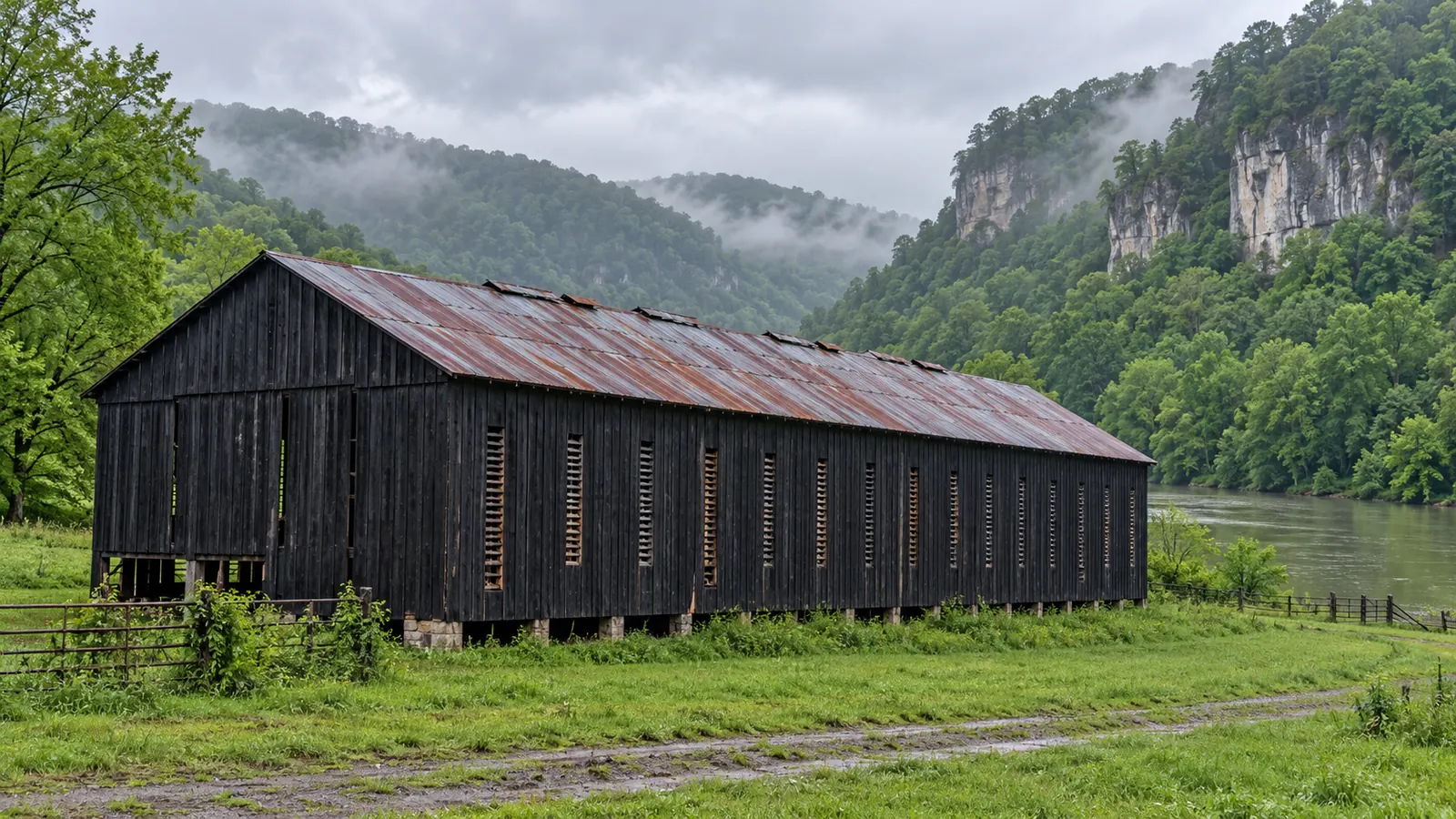
Panel ends at the eave stay wet the longest and rust first. They get the heaviest rust treatment on the roof.
A lower lean-to added beside the main roof meets it with flashing that loosens over time.
Three common acrylic setups for pitched metal in and around Frankfort.
Rust primer, sealed screws, and fabric at the laps, then two white acrylic coats. It fits shops and barns with surface rust only.
When a few eave panels have rusted through, those are replaced first and the whole roof is then coated as one surface.
About metal roof prepWhere screws and laps see hard movement, a tougher urethane goes on the details and acrylic covers the open field. Products must be approved to work together.
These apply to pitched roofs that drain well and get coated in proper weather.
A white acrylic finish reflects sunlight that weathered steel absorbs. Uninsulated shops feel the difference most on summer afternoons.
Acrylic accepts another acrylic coat after cleaning, which keeps future upkeep low compared to replacing panels.
Only rusted-through steel comes off. The rest stays in place and gets coated, which keeps waste and disruption down.
On a roof that drains, acrylic covers the same area for less material cost, leaving more of the budget for rust and screw work.
Acrylic jobs usually start with summer heat or a leak at a screw row. Either one is a fine reason to call.
Call and tell us where the water lands. A pitched roof leak almost always traces to a screw, lap, or ridge cap.
Call UsPlan the coating for warm, dry weather. Request an estimate and we look at the roof first.
Get A Free EstimateWeather sets the schedule for acrylic more than any other system.
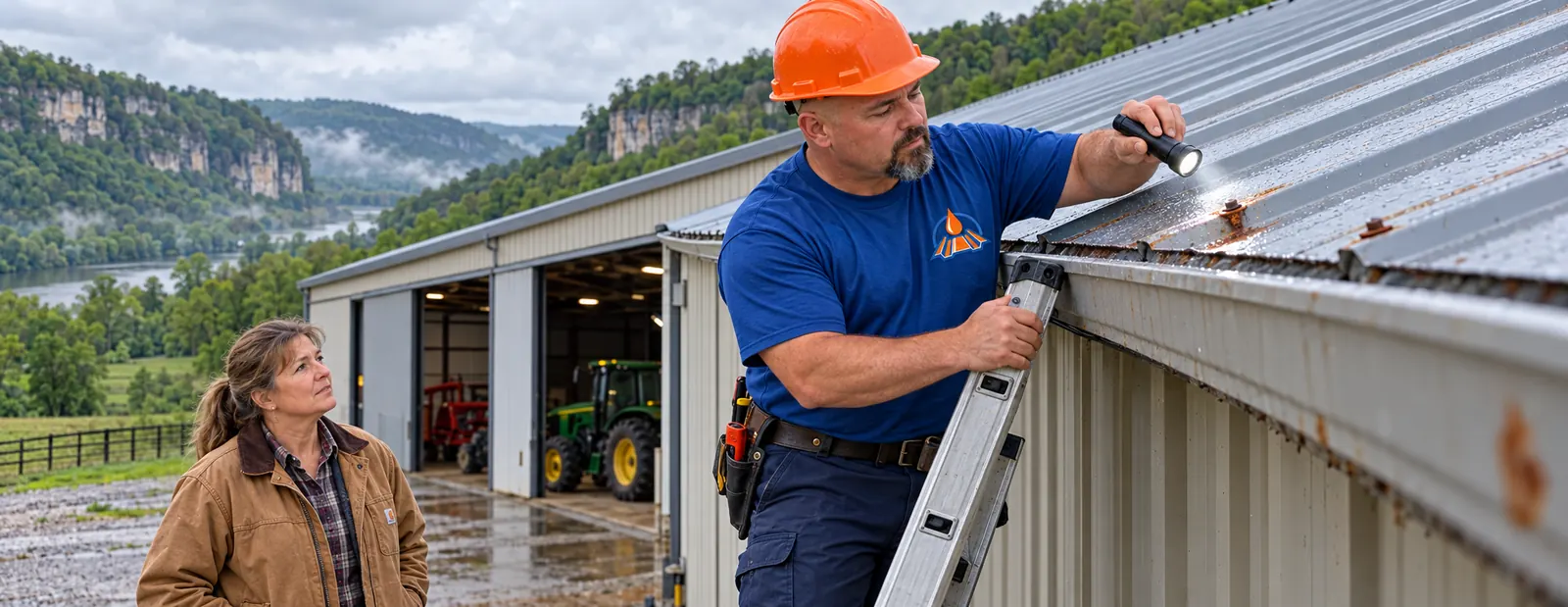
We check every rib and lap, note rust type, count failed screws in sample areas, and look for rust-through at the eave ends.
The panels are washed and left to dry fully. Acrylic over a damp surface or chalk loses its grip.
Rust is cleaned to firm steel and primed. Bare spots from old scrapes get the same treatment.
Screws are tightened or upsized and sealed. Laps and ridge caps get fabric and sealer.
Acrylic goes on mid-morning once dew is off the steel, with time to set before evening dew returns.
Mixed buildings often need a second system.
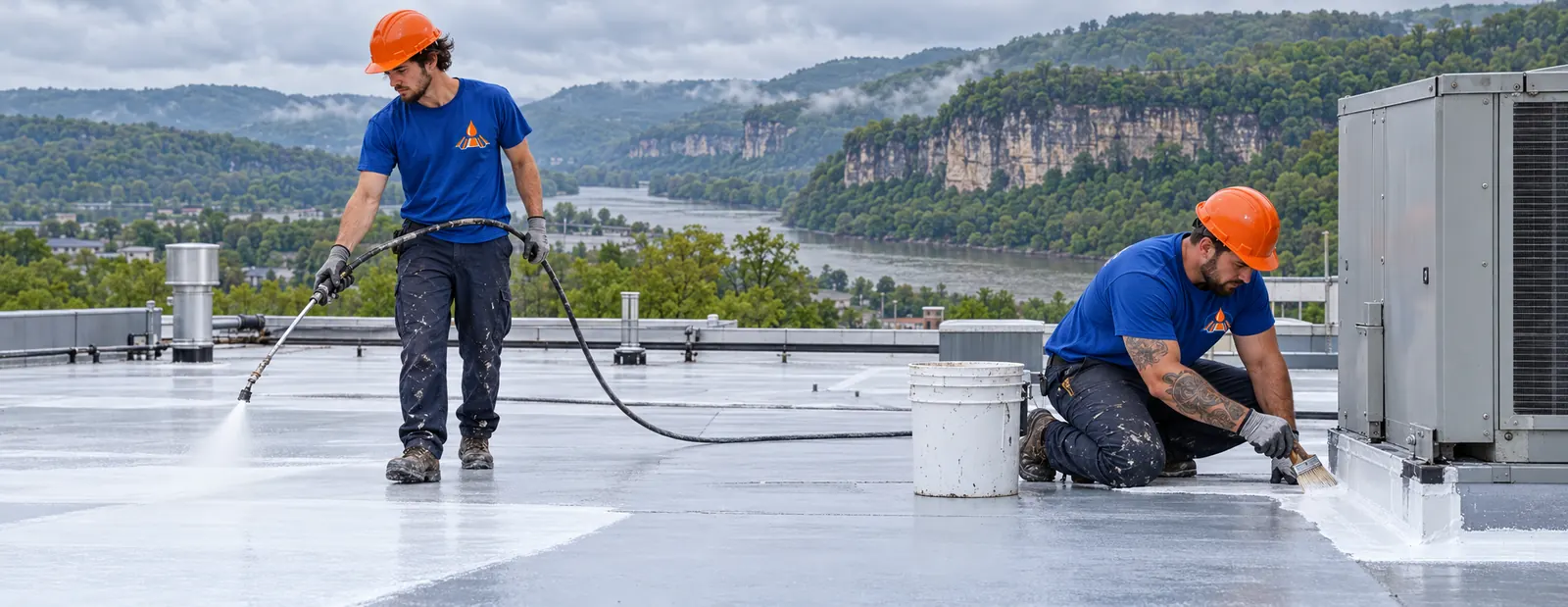
A flat dock or office section beside the pitched roof holds water, so it takes silicone instead.
See silicone coating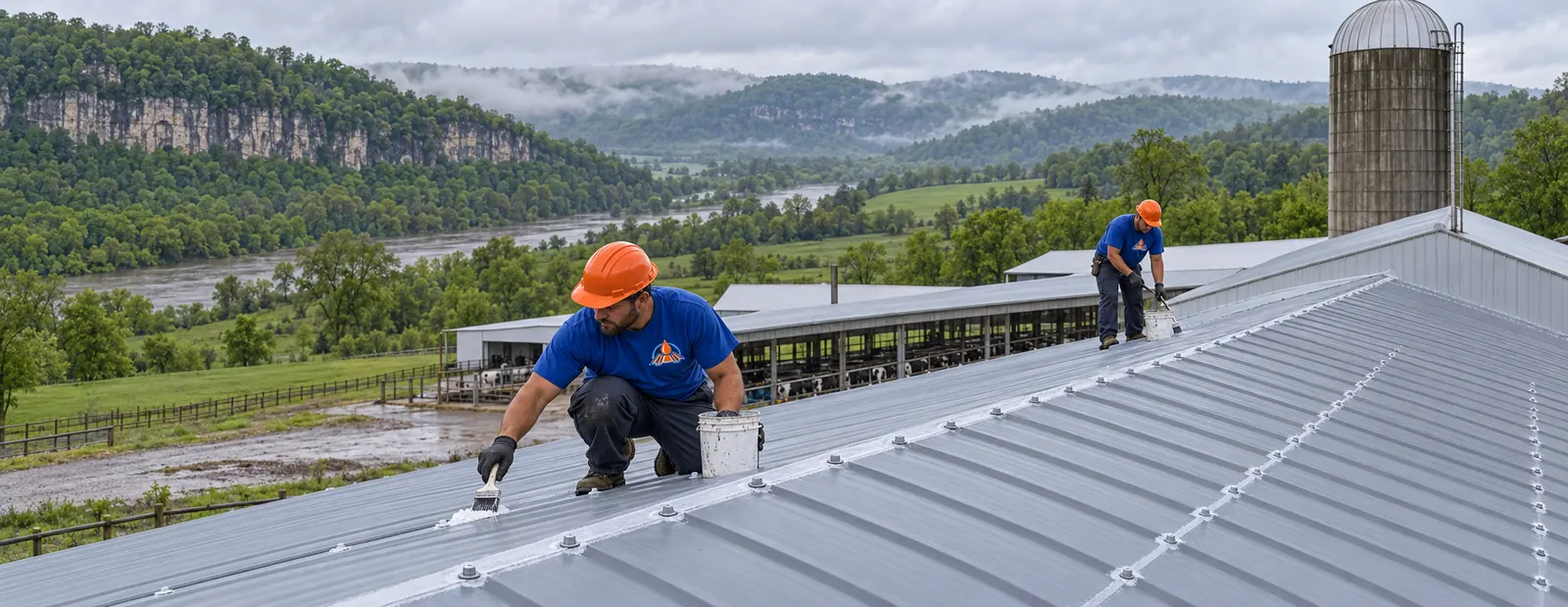
Roofs with heavy rust or many failed screws start with full metal prep before any topcoat choice.
See metal roof coating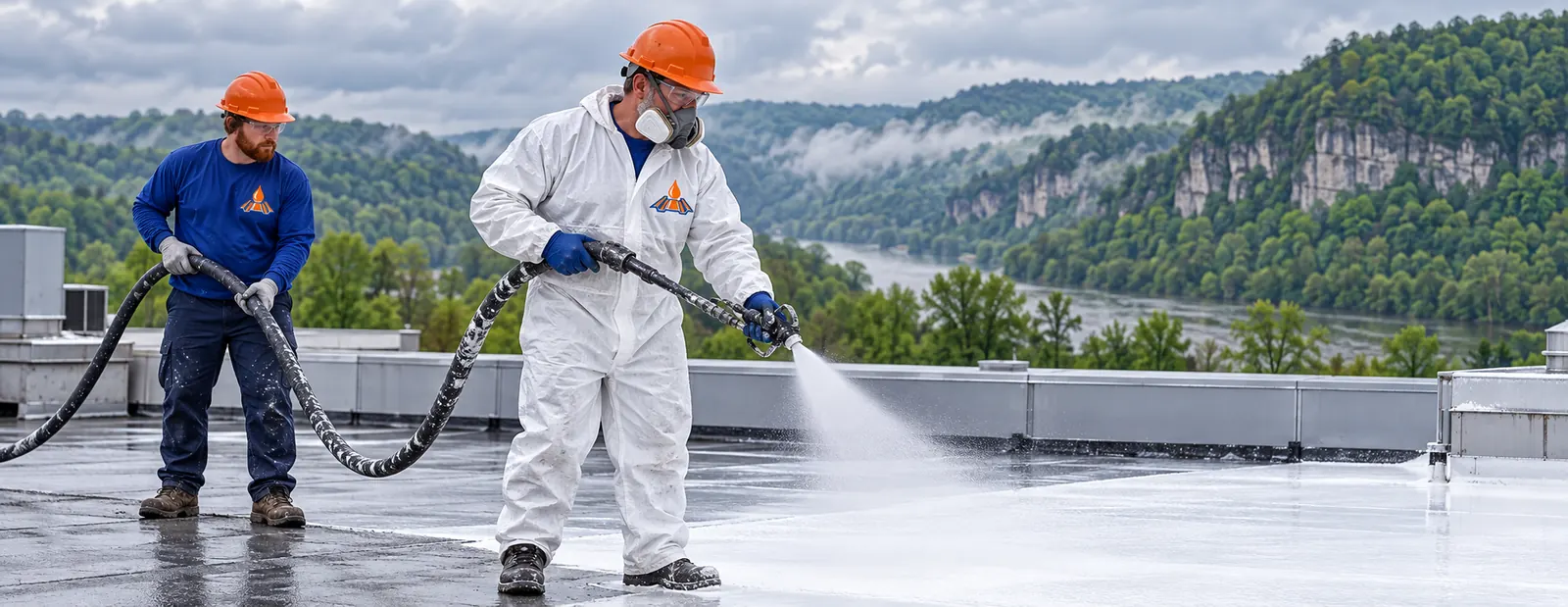
If heat is the main complaint and the building has no insulation, foam under the coating adds R-value.
See spray foam roofingWeather, heat, and cure time come up most.
It lowers the roof surface temperature by reflecting more sunlight back to the sky. Shops and storage buildings with thin insulation under bare panels feel that change most.
The Cool Roof Rating Council lists rated reflectance and emittance values, so a product’s numbers can be checked before it is chosen.
Steel panels grow and shrink with every swing across freezing, which works screws loose and opens laps. Elastic acrylic stretches with the steel, but backed-out screws can still lift the film, so a fall walk-over to check fasteners and clear gutters is worth doing each year.
It needs warm, dry air and no rain until it sets, which is why acrylic work wraps up early on cool fall afternoons. Morning dew delays the start, and a shower on fresh acrylic leaves streaks and thin spots that need recoating.
Late spring through early fall gives the warm, dry stretches acrylic needs. Each product lists a minimum surface temperature, and the crew checks panel temperature and dew point before spraying.
Not on the ponding areas. Acrylic softens under standing water. Those spots get drainage repairs or a silicone section while the pitched panels take acrylic.
It covers stains once the rust underneath is cleaned and primed. Coating straight over active rust lets it keep spreading under the film and bleed through.
Get a free estimate now and the work is scheduled for warm, dry weeks.
Leave a name and number and we will call you about the roof.
Or call (502) 289-9862 now