Acrylic Over Pitched Panels
Barn and shop roofs with a real pitch drain in minutes. A white acrylic system goes over primed rust and sealed laps and recoats easily later.
Acrylic roof coating
We coat commercial metal roofs on Frankfort warehouses, shops, and barns: rust treated, washers replaced, laps sealed, then full coats.
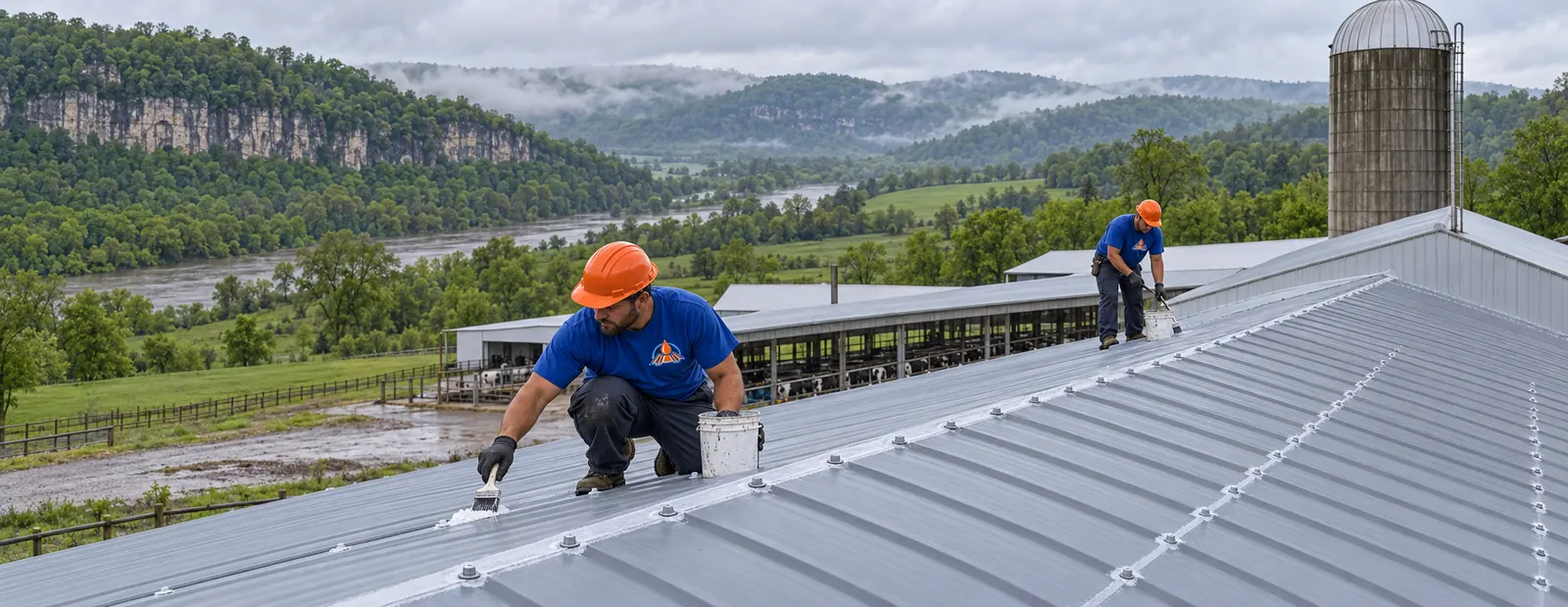
Coating works on steel that still holds a screw. These rows show where Frankfort metal roofs usually land before the roof walk.
| What You See On The Roof | Coat Now | Repair Then Coat | Re-Panel First |
|---|---|---|---|
| Surface rust limited to screw heads and panel edges | Coat Now | Repair Then Coat | Re-Panel First |
| Chalky, faded factory finish with no active leaks | Coat Now | Repair Then Coat | Re-Panel First |
| Backed-out screws and cracked washers across the field | Coat Now | Repair Then Coat | Re-Panel First |
| Small pinholes rusted through near the eave | Coat Now | Repair Then Coat | Re-Panel First |
| Large rusted areas where the steel flakes apart | Coat Now | Repair Then Coat | Re-Panel First |
| Panels that flex or sag between purlins | Coat Now | Repair Then Coat | Re-Panel First |
Rust-through is the line. Small holes get a metal patch set in sealant; larger rusted areas get a new panel before coating.
On an exposed-fastener roof, almost every leak traces back to one of these six places.
Fasteners along the peak loosen and closure strips crumble. Rain then blows under the cap on stormy days and drips far from the ridge.
Every screw sits on a rubber washer that hardens in the sun. Once it cracks, water follows the screw shank straight into the building.
Stitch screws that hold one panel over the next work loose. The overlap opens a little more each winter and water runs right into it.
Plastic skylight strips yellow and crack long before the steel around them. They need a decision before coating starts.
Water and leaves sit longest at the bottom of each panel run. Rust shows up there first, along with gutter seams that have opened.
Offices and docks added to a metal building meet the panels at a change in slope. Loose flashing there leaks in every heavy rain.
Metal roofs in Frankfort take one of these systems. The roof walk and the coating maker’s approvals decide which one.
Barn and shop roofs with a real pitch drain in minutes. A white acrylic system goes over primed rust and sealed laps and recoats easily later.
Acrylic roof coatingLow-slope metal that holds water near the gutters takes silicone, which tolerates ponding. Future recoats must stay silicone, so that choice is planned ahead.
Silicone roof coatingUrethane cures harder than silicone or acrylic. It works well as the base coat over seams and fasteners, with an approved topcoat across the field.
Uninsulated metal buildings can take sprayed foam over the panels, which buries every screw, then a coating to shield the foam from sun.
Spray foam roofingEach benefit below holds when the steel is firm and the prep is done right. Rusted-through panels get replaced first.
Screws, end laps, and ridge caps get detail work before the field coats, so the coating covers the actual leak points on the roof.
Old steel stays on the building and only failed panels come off. A full re-roof sends every panel and screw to the landfill.
Primer on cleaned rust and a thick film over the panels slow the corrosion that eats through laps and eave ends.
When the topcoat wears thin, a cleaning and a compatible recoat renew it without stripping the panels.
Tell us whether water is coming through now or the roof is just showing its age.
Call and say where the drip shows up and how big the building is. Screw rows and end laps are the usual suspects.
Call UsA chalky, rust-spotted roof is the right time to coat. Request a free estimate and we set up the roof walk.
Get A Free EstimateSix steps, in order, on a typical Frankfort warehouse or barn roof.
We mark rust type, failed washers, open laps, and any rust-through on a roof plan, and check the purlins and insulation from inside where the building allows.
Power washing removes chalking paint and grime. Most peeling on coated metal traces back to a poor wash, so adhesion is tested on a small area.
Red rust is ground or wire brushed down to firm steel and primed. Rust-through panels are cut out and replaced at this stage.
Loose screws are snugged, stripped holes get the next size up, and missing washers are replaced across the field.
Each side lap, end lap, ridge cap, and pipe boot gets sealer with polyester fabric bedded in.
Base and top coats go on at the listed thickness once the panels are dry and above the maker’s minimum temperature.
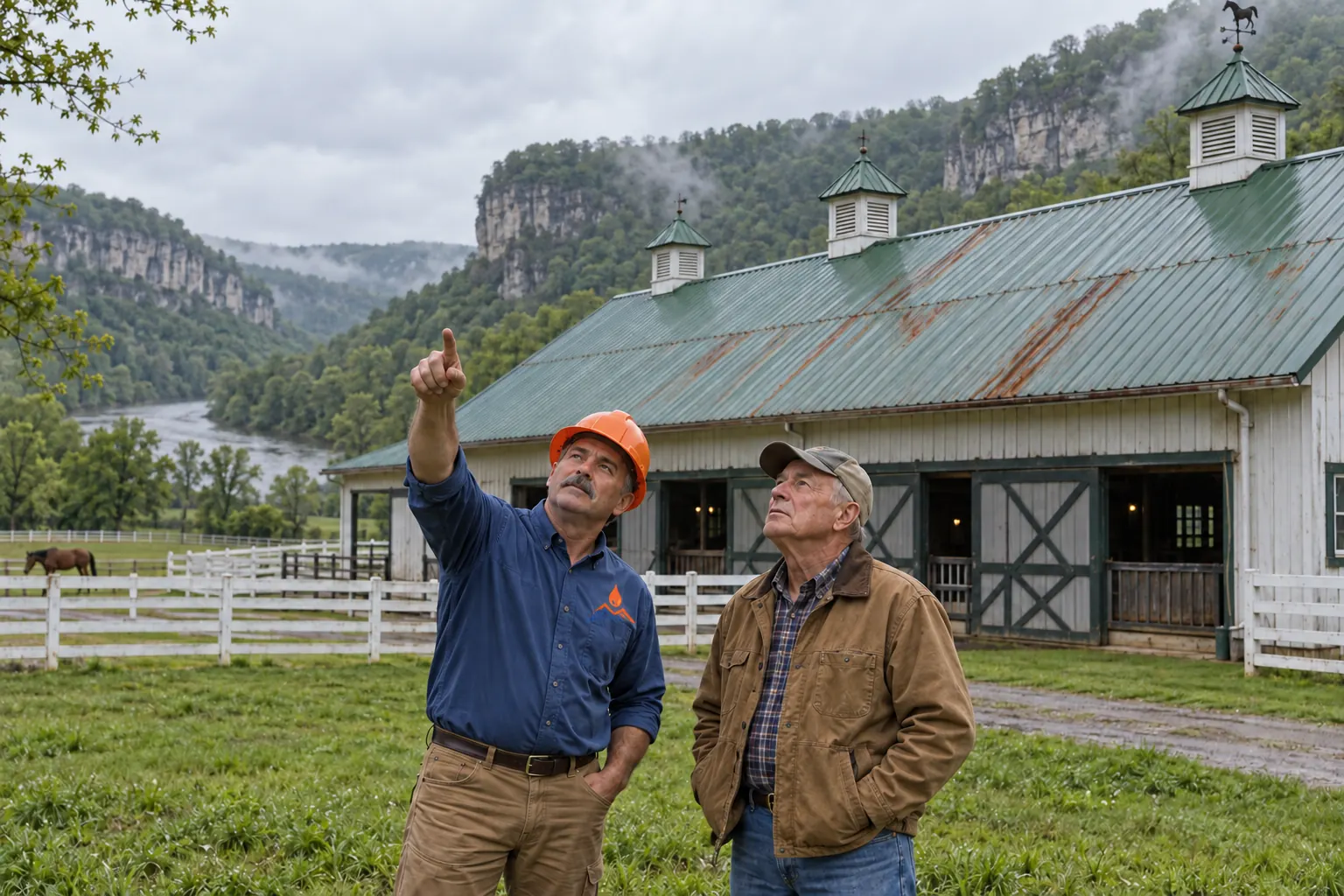
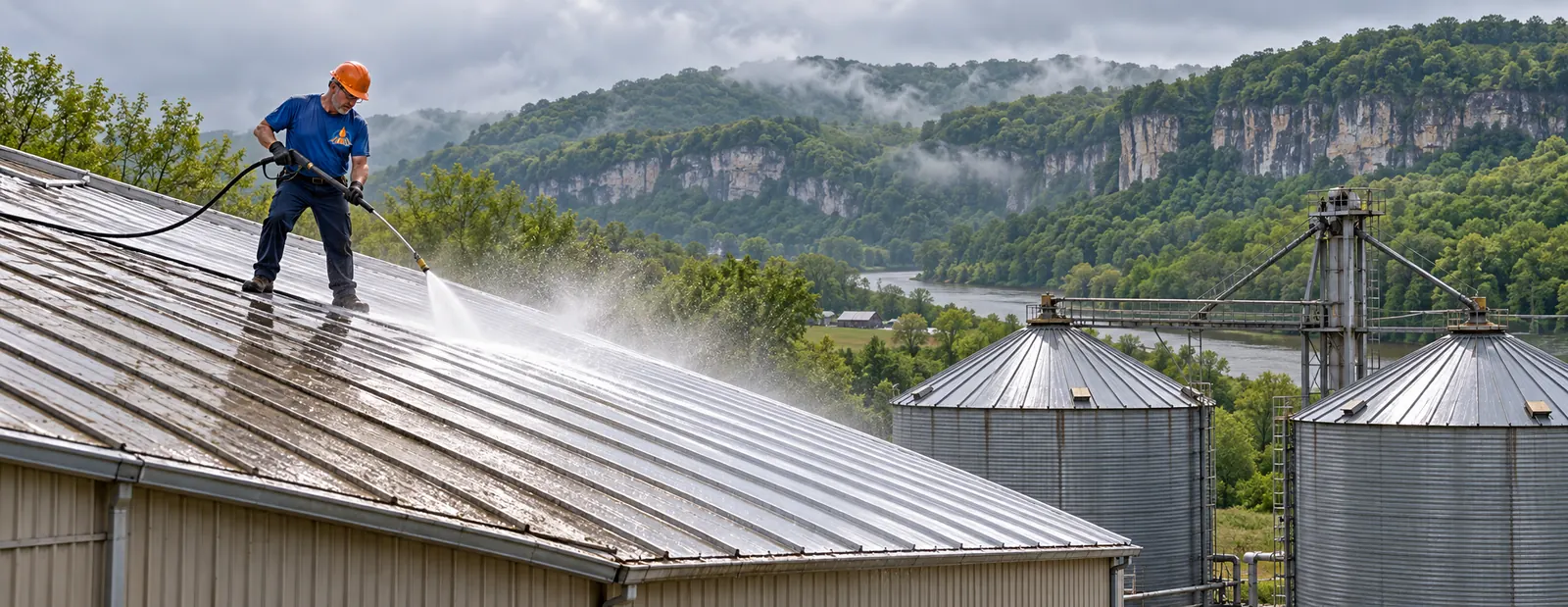
Some metal roofs need a different system for part of the building.
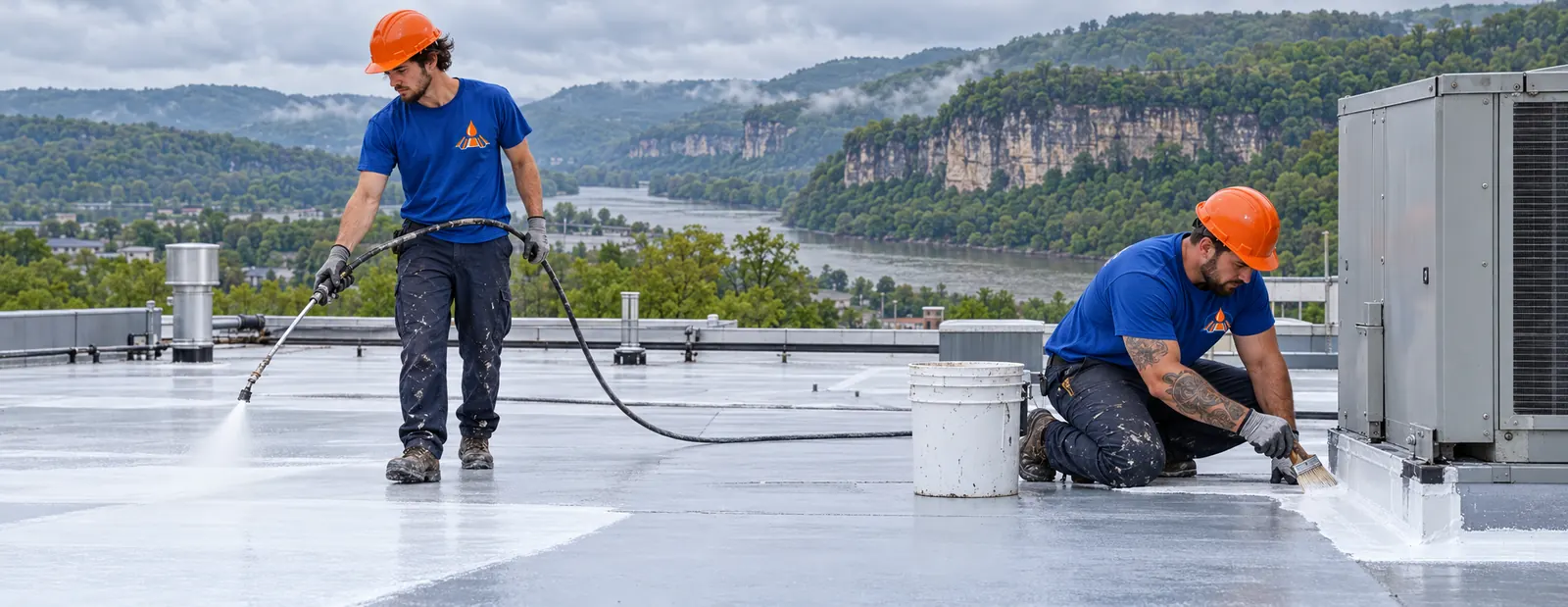
When water sits along the eaves or on a flat dock roof beside the panels, silicone handles that section better.
See silicone coating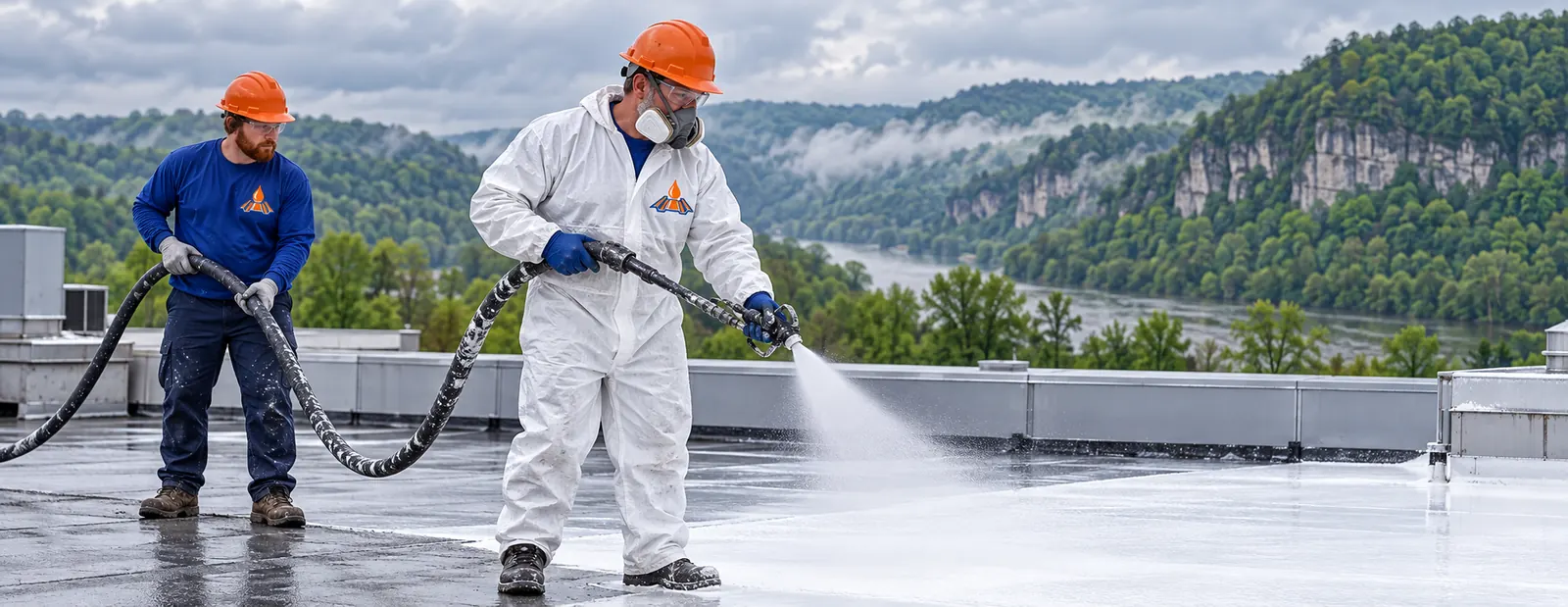
Shops that sweat in winter and bake in summer gain insulation from foam laid over the existing steel panels.
See spray foam roofing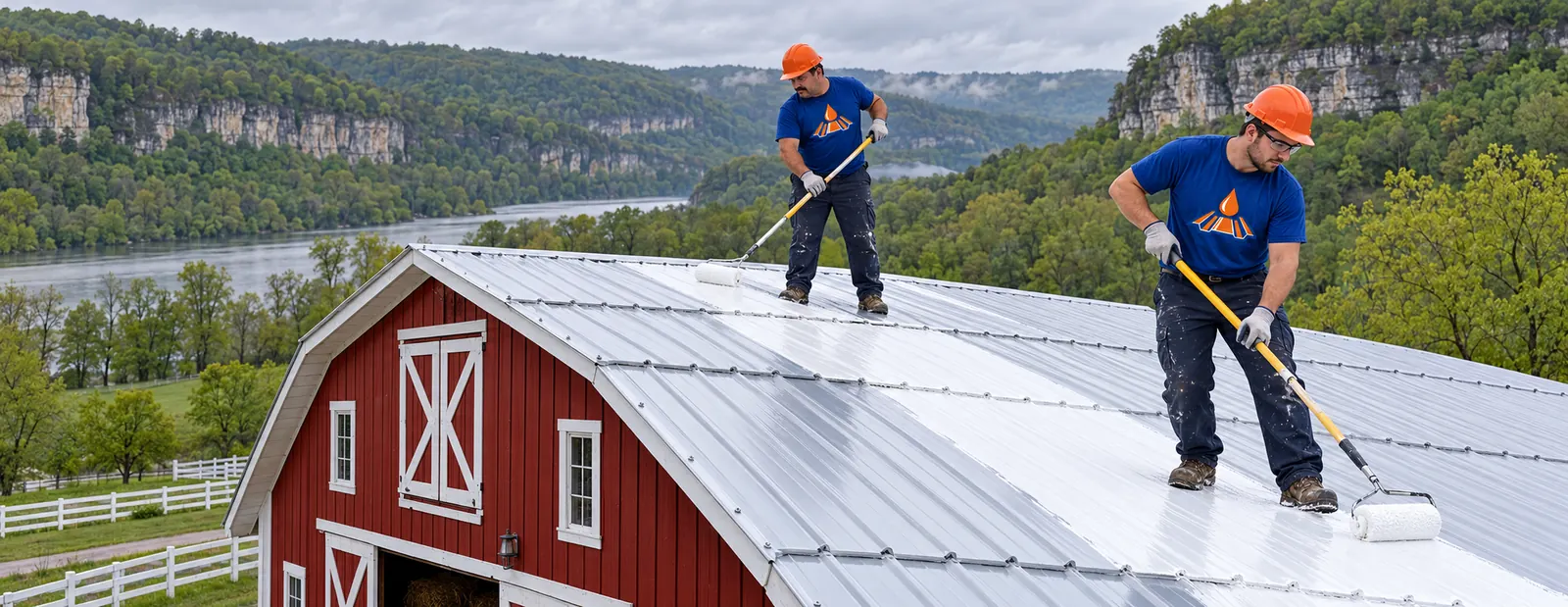
Steeper barn and shop roofs that drain fast are a natural match for a white acrylic system.
See acrylic coatingAnswers drawn from what owners ask on a roof walk.
Yes, once the loose rust is removed and the bare steel is primed. Rust around screws and along panel edges is normal on older Frankfort roofs and gets handled during prep.
Holes rusted through the steel are different. Small ones get a metal patch in sealant, and larger areas get a new panel before any coating goes on.
Roofs with firm panels, straight framing, and rust that stays on the surface. Warehouses, shops, distillery and storage buildings, churches, and barns with R-panel or standing seam roofs all qualify. Soft spots, sagging purlins, or wet insulation under the steel need repairs first.
It affects access and timing more than the roof itself. Franklin County puts flood stage at 31 feet at Frankfort, and buildings near the river get their roof work scheduled away from high water so lifts and trucks can reach the eaves.
The roof walk comes first, then power washing, rust grinding and primer, screw and panel repairs, and fabric-reinforced sealer at laps and penetrations. The field coats go on last. A small adhesion test confirms the washed panels will hold the coating.
Old asphalt patches usually come off before coating, since many coatings do not stick well to them and they hide rust underneath. Removing them lets the crew see the lap itself and seal it properly.
Mostly, with one difference. Standing seam panels float on clips, so the coating across the seams has to stretch with that movement. Exposed-fastener R-panel needs far more screw work, while standing seam leaks at end laps, clips, and penetrations.
Get a ballpark range for the roof size, or call and describe the building.
Leave a name and number and we will call you about the roof.
Or call (502) 289-9862 now