Silicone Over Low-Slope Metal
Primed rust, sealed screws, and fabric at the laps, then silicone across the panels. It suits shallow metal roofs with wet spots near the eaves.

Our silicone roof coating goes on low-slope commercial roofs in Frankfort where rainwater sits: the bottom of long metal runs, flat additions, and dock roofs.
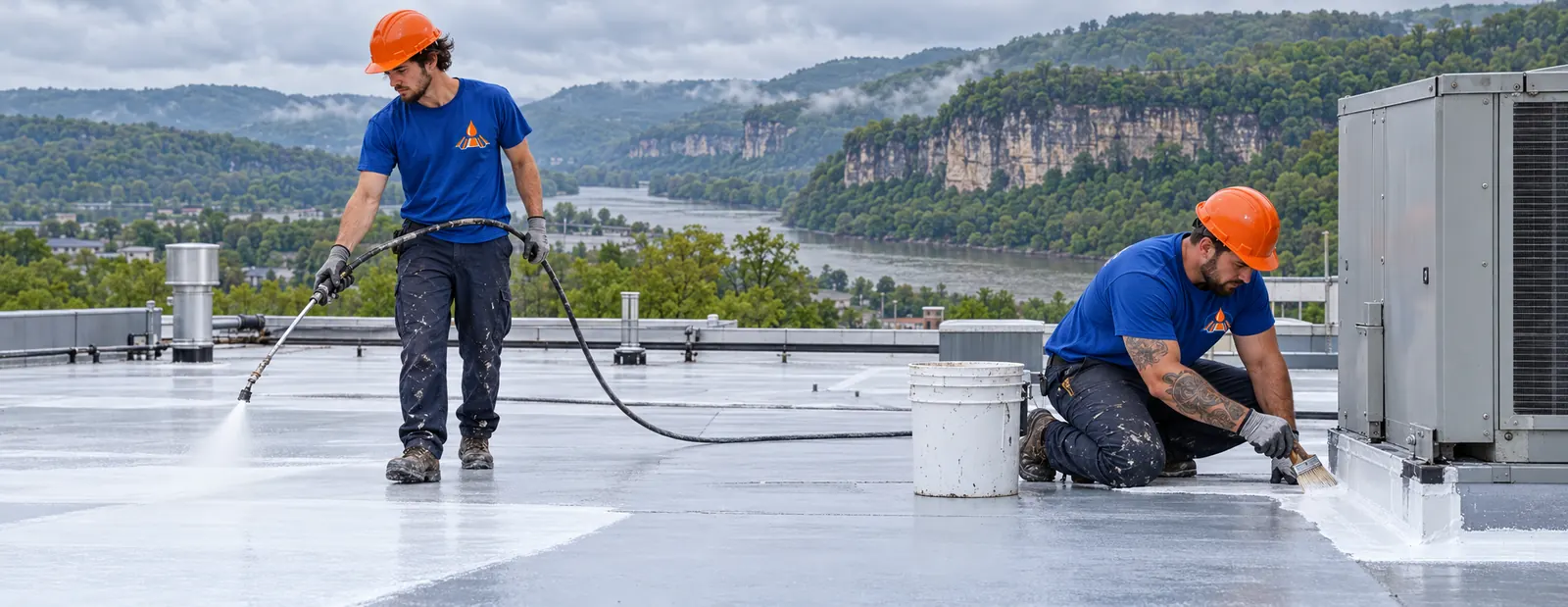
Silicone is the answer when water lingers. Match the rows below to what you see a day after a heavy rain.
| What You See On The Roof | Silicone | Acrylic | Fix Drainage First |
|---|---|---|---|
| Water standing at the low end of metal panel runs | Silicone | Acrylic | Fix Drainage First |
| A flat office or dock roof attached to a metal building | Silicone | Acrylic | Fix Drainage First |
| Ponding behind a rooftop unit curb | Silicone | Acrylic | Fix Drainage First |
| Pitched barn roof that drains in minutes | Silicone | Acrylic | Fix Drainage First |
| Water that never leaves a sunken area for days | Silicone | Acrylic | Fix Drainage First |
| Soft, wet insulation under the low spot | Silicone | Acrylic | Fix Drainage First |
Coating does not move water. Where a sag holds water for days, the cause gets fixed before any system goes on.
Silicone work starts with finding every place water collects or gets in. These six show up on most low-slope Frankfort roofs.
Leaves and grit wash down and stop at the first obstruction. That line holds damp dirt that keeps the panels below it wet.
Fasteners in a spot that stays wet rust faster than the rest. Each gets resealed before the silicone goes on.
On a shallow pitch, water creeps back uphill into end laps. Fabric and sealer close the joint before the field coats.
Skylight frames and unit curbs block water on their uphill side. Ponding rings form there after every storm.
A clogged eave gutter pushes water back under the panel ends. Clearing it is part of the prep work.
The attached flat roof holds water longest. Its membrane or built-up surface gets repaired to suit that material, then coated.
Silicone comes in a few setups. The one we install depends on what is under it and how wet the roof stays.
Primed rust, sealed screws, and fabric at the laps, then silicone across the panels. It suits shallow metal roofs with wet spots near the eaves.
Office and dock additions with a membrane or built-up surface get repairs suited to that surface, then silicone over the whole section.
A metal building with a flat addition can take acrylic on the steep panels and silicone on the flat part, each where it works best.
About acrylic on pitched panelsThese hold when wet insulation is replaced and the drainage problem is understood before coating.
Silicone resists breakdown under standing water better than acrylic, which is why it goes on the low, wet parts of a roof.
The coating goes on over the existing roof, so the flat section over an office or dock keeps working during the job.
A white silicone finish reflects sunlight that a dark membrane or weathered steel absorbs, which helps rooms under a flat addition.
Worn silicone takes a fresh silicone coat after cleaning. Planning for that keeps the roof from needing a tear-off later.
Silicone jobs often start with a ceiling stain under a flat section. Tell us where it shows.
Call and describe the room under the stain and the roof above it. Wet insulation changes the plan, so we check that early.
Call UsWater that sits after rain is a good reason to coat soon. Request an estimate and we set up the roof walk.
Get A Free EstimateHow a low-slope roof goes from ponding to coated.
We map every low spot and ponding ring, probe the insulation under wet areas, and check the gutters and drains that should carry water off.
Soaked insulation under the steel or membrane gets cut out and replaced. Silicone over wet material traps the moisture.
Power washing removes dirt, algae, and loose coating. Silicone needs a clean, dry surface to grip.
Laps, curbs, and seams on the flat section get fabric and sealer. Primer goes on where the maker calls for it.
Silicone goes on in one or two passes at the listed thickness, heavier where water collects if the maker allows it.
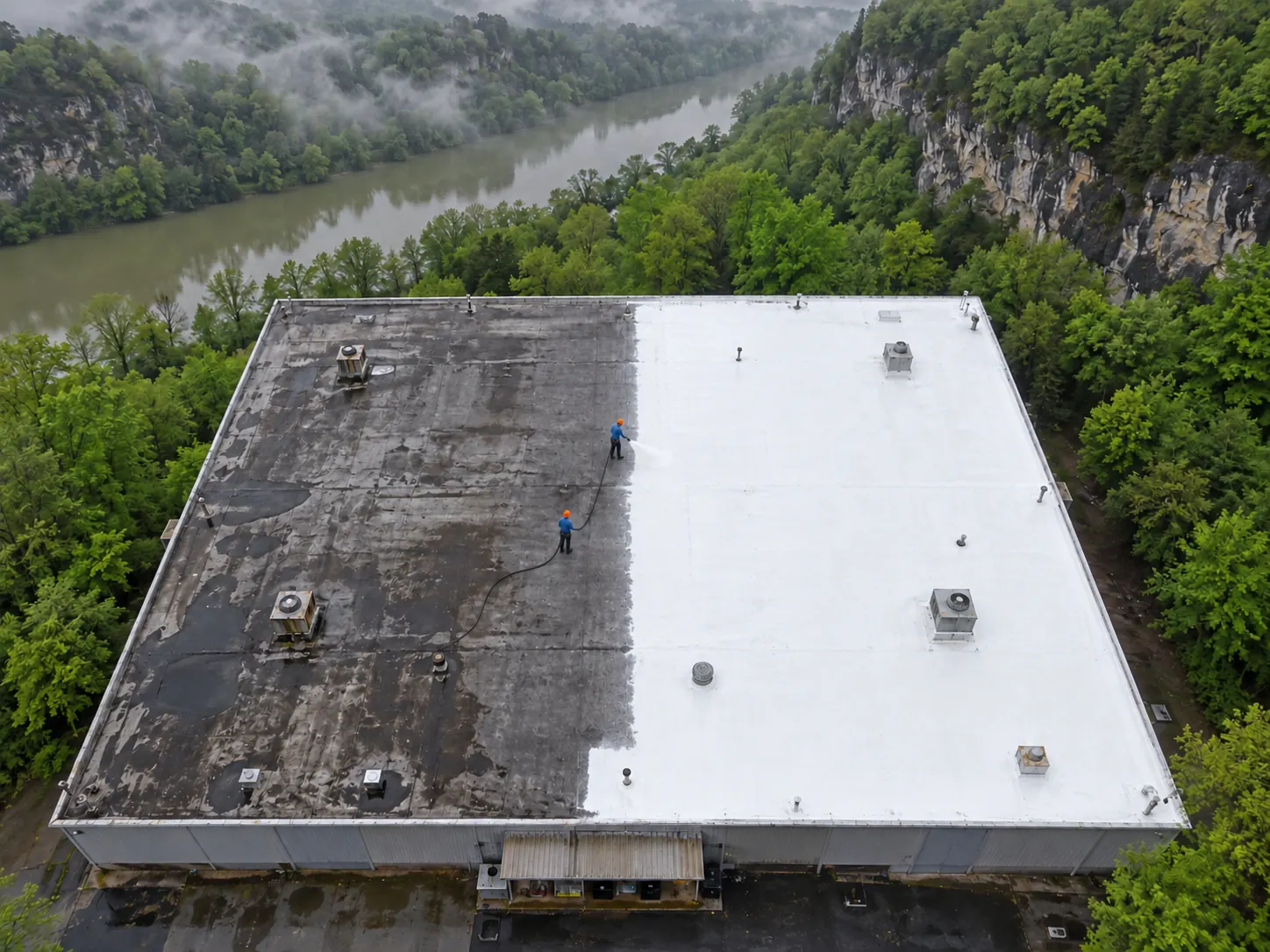
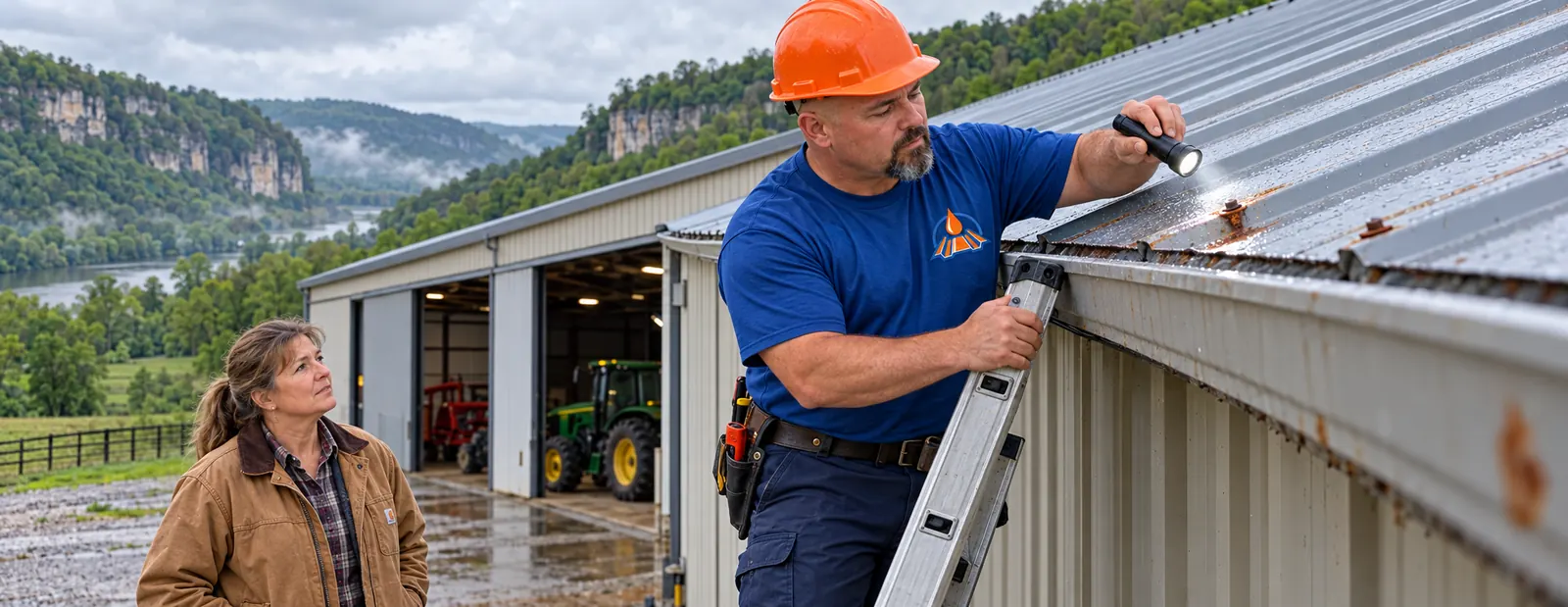
Silicone is one tool. These fit other parts of a building.
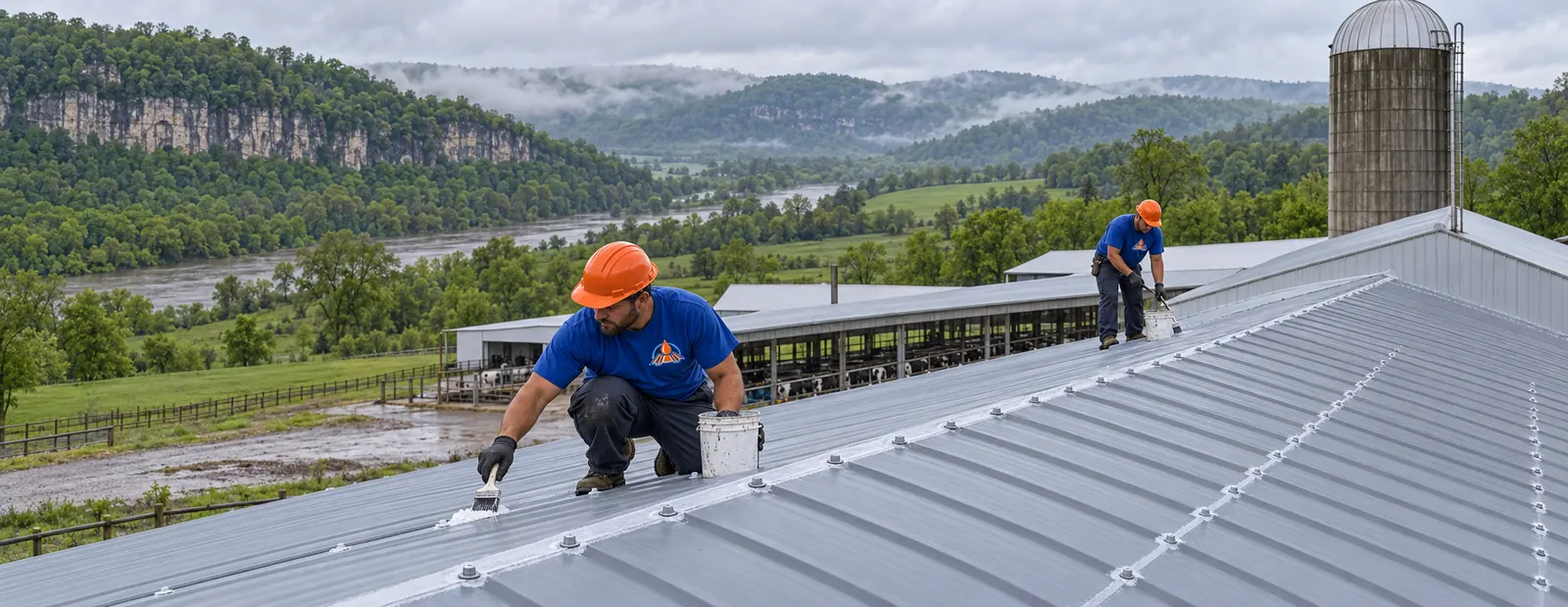
Pitched metal panels with rusty screws and open laps get the full metal roof prep before any topcoat.
See metal roof coating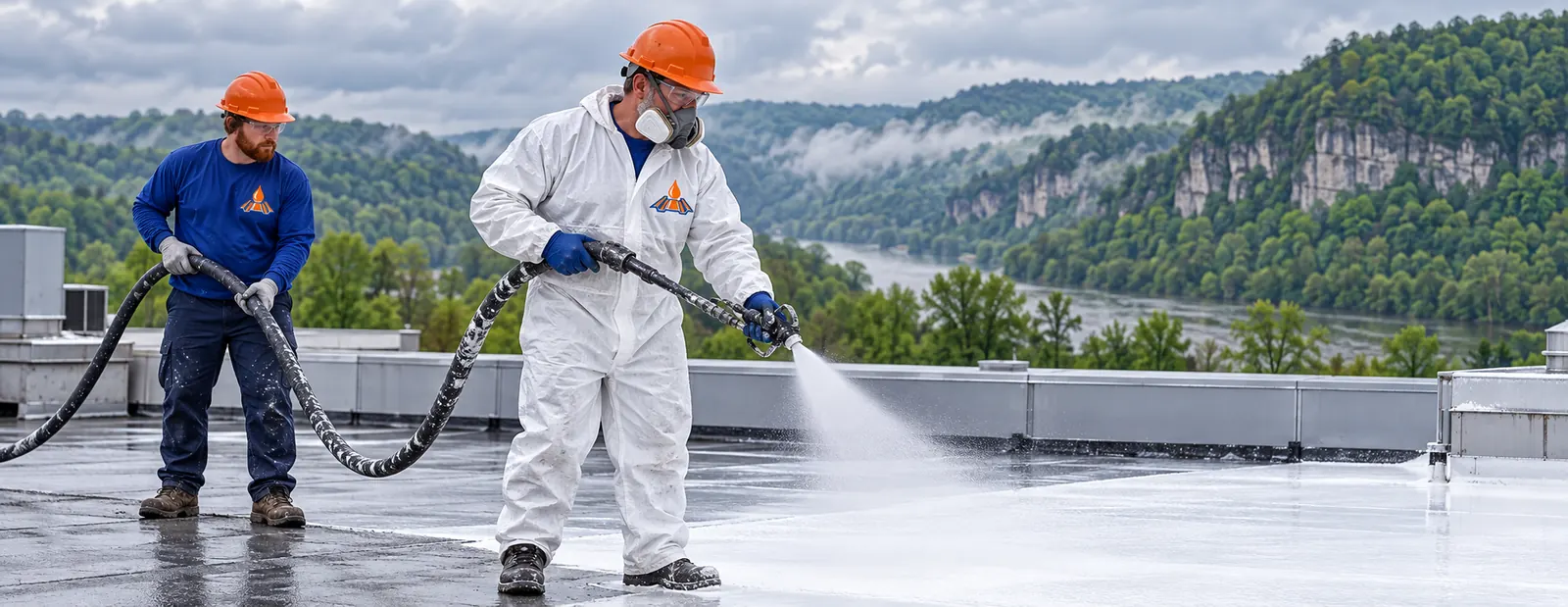
Low spots that need building up for drainage can sometimes be shaped with sprayed foam before coating.
See spray foam roofing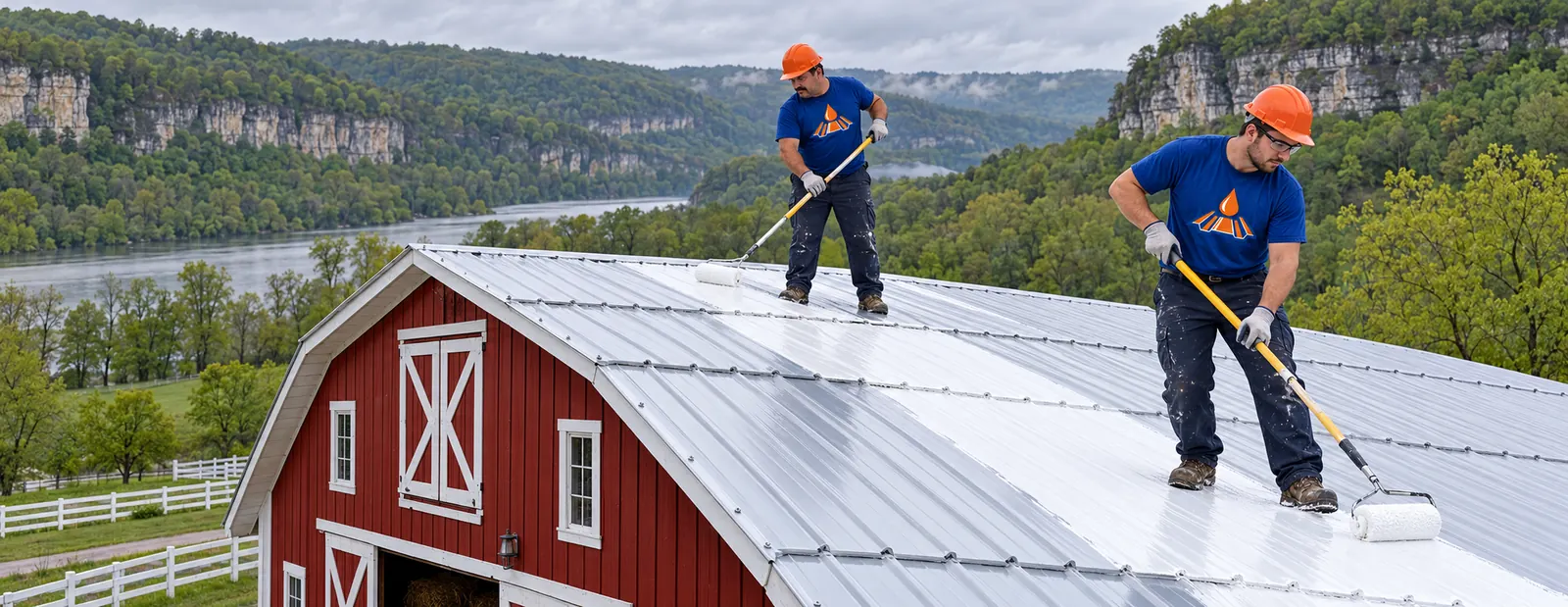
On the steep part of a mixed roof, acrylic is the lower-cost choice and recoats with less fuss.
See acrylic coatingWhat Frankfort owners ask before a silicone job.
Silicone for spots where water sits, acrylic for pitched panels that drain fast. Both are elastic and white.
Low-slope metal with flat areas near the gutters leans toward silicone. Steeper R-panel roofs on barns and shops usually take acrylic. A building with both gets each one where it fits.
Each side lap and end lap is cleaned and primed, then covered with sealer with polyester fabric pressed in. End laps get the most attention because water runs straight into them. The silicone field coats then bury the fabric.
Yes, with two prep plans. The metal panels get rust and screw work while the flat section gets repairs suited to its membrane or built-up surface. The joint between them, where flashing loosens and water ponds against the panels, gets the most detail work.
No. Very little sticks to cured silicone except more silicone, so a silicone roof is recoated with silicone. That is worth knowing before choosing it for a roof that drains well enough for acrylic.
No. It tolerates standing water but does not move it. A sag from bent purlins or a clogged gutter is corrected first, and silicone handles the shallow ponding that remains after the drainage work.
Silicone collects more dust than acrylic and loses some of its bright white over time. A gentle rinse during routine roof checks restores much of the reflectance.
Request a free estimate for the low-slope sections, or call and tell us where the water sits.
Leave a name and number and we will call you about the roof.
Or call (502) 289-9862 now